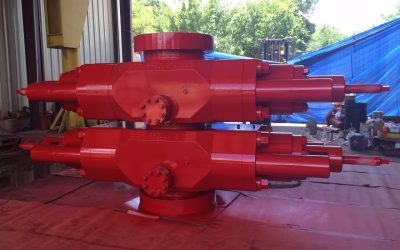
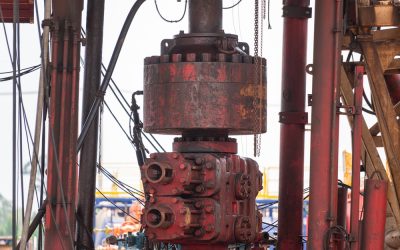
When you visit a drilling site ad hear the term “BOP stack,” you may wonder, “What is a BOP stack?” First, BOP is an acronym for a “blowout preventer,” a piece of equipment that controls the pressure of a well during drilling. A BOP stack has several blowout preventers. This guide explores the meaning of a BOP stack and its configurations.
Blowout preventers (BOP) stacks are popular rig components in oil drilling sites because they can seal a wellbore to prevent well kicks. The two main types of BOPs in drilling sites are RAM and annular BOPs. A BOP stack has many blowout preventers arranged on top of each other to control oil and gas pressure in a well.
What is a BOP stack in drilling operations? Learn the components of a BOP stack and the common BOP configurations. Share on XLet’s dig deeper into what a BOP stack means and the various stack configurations.
BOP Stack Definition
A BOP stack consists of two or more BOP units that control pressure in an oil-drilling well. The equipment in the BOP stack provides the force to contain abnormal pressures in the well. A typical stack may have 1-6 ram-type preventers and 1-2 annular-type preventers. The annular preventers are usually on top of the ram-type preventers.
Stack Configurations
Stack configurations are designed to provide maximum safety, integrity, and flexibility to control an oil-well blowout. A multiple ram configuration can have four sets of rams. Each set in the configuration has a distinct function. For example,
- 1st set of Rams can be fitted to close on a 5-inch diameter drill pipe
- 2nd set of Rams can be configured to fit into a 4 1/2-inch drillpipe
- 3rd set of Rams can be fitted with blind rams that can close on the openhole
- 4th set of Rams can be a shear ram to cut and hang off the drill pipe
Generally, annular preventers are usually installed on the stack’s top since they can get closed over various tubular sizes and openhole. However, they are not rated for high pressures like the Ram BOPs.
Get What Works For You
With many types of BOP stack configurations available, you must consider your oil-well needs to choose a BOP stack configuration that works best for you. The bottom line is to BOP stack with a kill line to kill and choke lines to prevent potential blowouts.
BOP Products Can Help
So far, you know the answer to the question, “What is a BOP stack?” The good news is that BOP Products can help you get the best blowout preventer (BOP) for your drilling operations. We offer various types of BOPs and their accessories.
Contact us today for reliable blowout preventers for your drilling site.