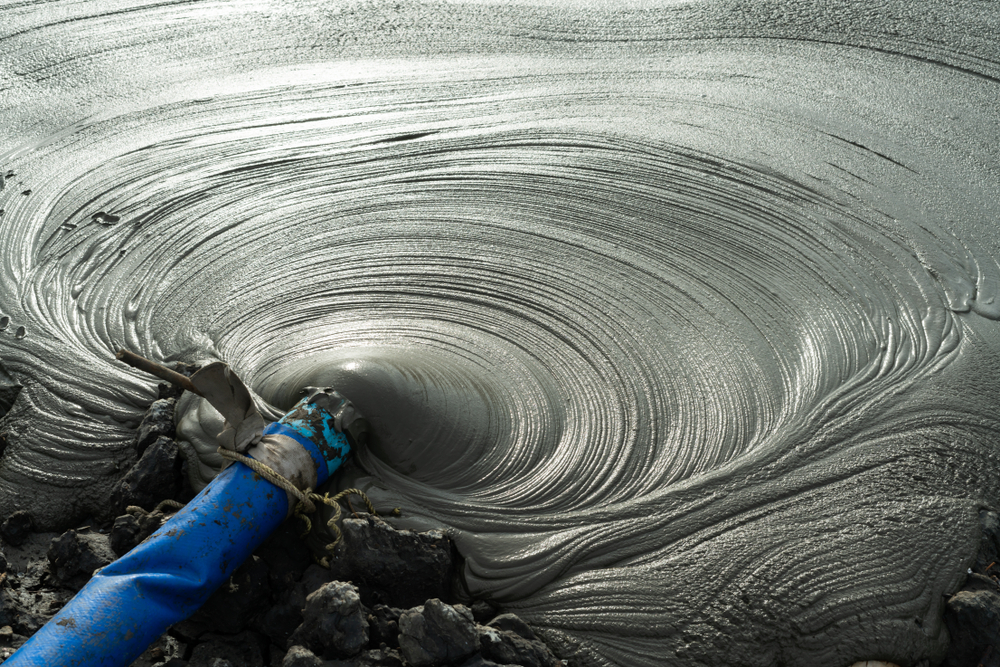
“Drilling mud” is a common phrase in an oil drilling site. However, if you are new in the oil and gas industry, you may wonder, “What is drilling mud?” Drilling mud has made it easier for oil drilling companies to drill deeper and longer wells and boreholes into the earth. It’s one of the most significant innovations for drilling operations in oilfields.
Drilling mud is drilling fluids that operators add to oil wellbores to facilitate the drilling processes. The drilling mud helps to suspend rock cuttings, control well pressure, stabilize exposed rocks, and provide buoyancy. It also cools and lubricates the wellbore, allowing rock cuttings to move smoothly to the surface. In detail, let’s find out what drilling mud is and how it’s beneficial during drilling.
What is it?
Drilling mud simply refers to liquid drilling fluids used when drilling oil and gas wells. It comes in three forms: oil-based mud, water-based mud, and synthetic-based. The main function of drilling mud is to suspend rock cuttings in the wellbore. This gel-like fluid keeps the cuttings from the oil well, making it easier for operators to replace drill bits.
Benefits of Drilling Fluids
Besides suspending rock cuttings in the wellbore during drilling, drilling fluids have many more benefits, including:
- Controlling Pressure: Drilling mud controls well pressure by offsetting the hydrostatic pressure in the rock formations and hydrocarbons.
- Stabilizing Rocks: Drilling mud contains special additives to ensure the rock formations in the well don’t absorb it. Also, it helps keep the rock pores open.
- Increasing Buoyancy: As the well goes deeper, more drill pipes go into the well, which can be heavier. Thankfully, drilling mud adds buoyancy, minimizing stress.
- Adding Lubrication: Drilling fluids help lower rock formations’ friction, reducing heat. This cooling and lubrication help to extend the drill bit’s lifespan.
Oil Based, Synthetic Based, and Water Based Muds
There are three types of drilling fluids: oil-based, synthetic-based, and water-based. Each drilling mud composition provides different solutions in the wellbore. If a rock formation comprises clay or salt, you must take proper actions to ensure the drilling fluids’ effectiveness. The drilling fluid used depends on the rock’s chemical composition.
Get Your Drilling Equipment From BOP Products
So far, you can answer the question, “What is drilling mud?” This substance is vital in drilling operations as it helps to control wellbore pressure, stabilize rocks, increase buoyancy, and reduce friction. However, you can achieve that if you use the right drilling equipment. BOP Products can help you get high-quality drilling equipment.
Contact us today to source high-quality drilling equipment, including blowout preventers.